|
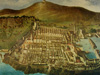 The Republic of Dubrovnik was the aristocratic republic, with power and great the eternal (parliament). The Great Council was elected by the City bureaucracy - Council (Senate), which was more concerned about foreign affairs, and the Small Council (executive). The prince was elected for one month because of the prevention of corruption. There was no permanent army, but only guards, and if necessary, the mercenaries. Dubrovnik issued a decree on the abolition of slavery and the ban on the transport of slaves on January 27th in 1416. It was the first republic that banned slavery in Europe. In the 15th century, there were about 40,000 inhabitants, which made it one of the major cities in Europe (London, about 50,000, Florence over 100,000). The Republic of Dubrovnik was the aristocratic republic, with power and great the eternal (parliament). The Great Council was elected by the City bureaucracy - Council (Senate), which was more concerned about foreign affairs, and the Small Council (executive). The prince was elected for one month because of the prevention of corruption. There was no permanent army, but only guards, and if necessary, the mercenaries. Dubrovnik issued a decree on the abolition of slavery and the ban on the transport of slaves on January 27th in 1416. It was the first republic that banned slavery in Europe. In the 15th century, there were about 40,000 inhabitants, which made it one of the major cities in Europe (London, about 50,000, Florence over 100,000).
Dubrovnik Republic had experienced a boom in the 16th century, when trade relations with the Turks were established (even though they paid tribute to retain the freedom, independence and privileges of a free trade throughout the Ottoman Empire). Dubrovnik had already had a foothold in the Balkans and successfully developed trade with Turkey, as well as with Italy and Spain.
In the Bulgarian capital Sofia, there is the church of St. Mary and St. Blaise, by the regiment called the "Church of the Dubrovnik". For a long time it was the only place in the Ottoman Empire in which Christians were allowed to serve mass.
Inhabitants of Dubrovnik traded mines, agricultural and livestock products, manufacture goods, salt, etc. In the 16th century, Dubrovnik had a strong navy (180 ships), the third largest in the world by intensity. Dubrovnik ships transported goods to foreign traders, sailed for the shores of the Mediterranean Sea and came to England - there is evidence that the Dubrovnik boat reached the coast of North America, where the sailors mix with the locals (Indians). Dubrovnik colony in Goa Gvendolin in India is also known, where there is still the statue of St. Blaise, patron of Dubrovnik, and some descendants of merchants from Dubrovnik.
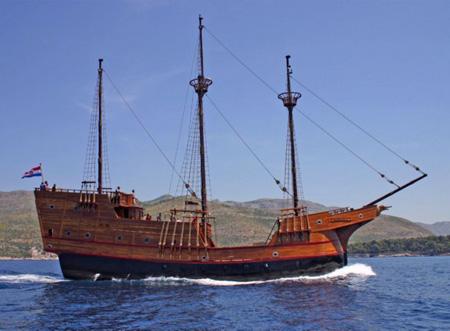
Dubrovnik's economy was made from the intermediary trade and shipping, as well as from crafts. In the 15th century, the first workshop for the production of cloth, glass and soap was organized. At that time, Dubrovnik had the educational, social, communal and economic institutions. In the 16th century through trade and seafaring, in Dubrovnik, are accumulated substantial financial resources. Established to strengthen trade and maritime enterprise, but also deepening social differences between the commoners and the richer equated with the nobility. Dubrovnik is built revenues from trade and commerce.
In Dubrovnik, freedom was the most respected. It had its own flag (with the image of the patron Saint Blaise and the other with the letters "LIBERTAS - Lat. Freedom"), and it could be seen on military coats. Dubrovnik connected the diplomatic and representative offices in many European countries. Their interests in the courts of European monarchs represent the envoys, while protecting the interests of the consulates in Dubrovnik sailors in the same time.
An important patron of Dubrovnik's freedom was Spain, while the greatest enemy to its independence and freedom was Venice. In the second half of the 16th century, the power of Dubrovnik decreased. The causes were the great geographical discoveries and the price revolution that depreciate money. Dubrovnik bankers invested less in shipping and trade, so there was a lack of capital, while the competition with French, English and Dutch sailors was higher.
Falling
In 1667, Dubrovnik was almost destroyed by a powerful earthquake which destroyed many buildings and killed many people.
The discovery of America moved trade routes to the Atlantic, construction scaffolding Split by the Venetians and the fact that no longer had a monopoly on trade with the Turks are among the major causes of the decline of the Dubrovnik Republic. The earthquakes, then a fire was only the crown of all the trouble which at that time happened in Dubrovnik.
After centuries of a successful balance between two superpowers - the Venetian Republic and Ottoman Empire, a general offensive in Europe has affected the Turks and Dubrovnik, as Venetians used the weakness of the Turks and taking the Trebinje district completely cut off Dubrovnik from the Ottoman Empire and brought it in a very difficult situation. However, peace in Karlowitz 1699th The Venetian Republic was forced to withdraw from Popov fields and return it to the Turks, and on that occasion conducted the first systematic demarcation between Turkey and Venice in Dalmatia. Dubrovnik was once again, especially skilful diplomacy, free of danger, the Venetian Republic by districts, and is separated from the hinterland.
Peace in Pozarevac in 1718 had made Dubrovnik the corridor between the town of Neum, and Juniper, which remained the Turks. Thus, the Dubrovnik and physically separated from the Venetian possessions in Dalmatia. During the war with the Turks (1683-1699), Dubrovnik has decided once again to accept the symbolic supremacy of the crown of Hungary-Croatian and restore control from 1358. In the 18th century, it re-strengthens the economy and built a strong navy. The orientation of the major European naval powers in the Atlantic Dubrovnik used to transit the Mediterranean Sea, but his ships sailed across the Atlantic to America.
In the 18th century, Dubrovnik had more than 85 consulates. The strongest factor was the economic citizenship, because the nobility after the earthquake in 1667 was thinning out.
The disappearance of the Republic of Dubrovnik
In the early 19th century, at the scene of Europe appears to Napoleon, which influences the history of Dubrovnik. The French army of General Lauriston had entered into Dubrovnik in May 26th 1806 and occupied the city, while in January 31th 1808; Marshal Auguste Frederic Louis Viesse de Marmont abolished the Dubrovnik Republic, despite opposition from the authorities of the Republic. After the fall of Napoleon, the Vienna Congress in 1815, Dubrovnik diplomats were trying to restore the Republic, but fail because of the Austrian effort to expand the territory. Under the leadership of Divo Natali Dubrovnik raise a revolt in 1813 and are released by authorities, but for a few months of the Austrian army entered the town and break the rebellion. |




 Storia di Dubrovnik